The challenge with new teams is that they often haven’t been reviewing data this regularly, and they get caught up in the ‘how’ (i.e., how will we get that information?) or the question of what leading indicators they should use.
The first thing I said to them was don’t worry about ‘how’ – just think strategically as a Leadership Team about what you would like to see & then we can work out how & if we can get that data.
With this team, they weren’t sure what the leading indicators were for some of their departments or functions.
We worked through a simple exercise…
Starting with the end in mind, we asked the question – “What is each function trying to achieve?” (That’s the lagging indicator).
From here, we then worked backwards.
What’s the step before that? And what could we measure there?
And the step before that? And what could we measure there?
And on & on until we got to the beginning of each process/function.
This means that we not only achieved some ‘ideal’ scorecard metrics, but we also have the beginnings of their Core Processes!
Doing it this way is called ‘Getting what you want’ & it’s one of the EOS tools in the EOS Toolbox that I’m really finding it has multiple uses in business & life.
Now, the team’s next challenge is just to start measuring. They will begin to see what they can measure easily. Most importantly, once they’ve been measuring for a while, they will need to ask, “Is the data useful?”
And then, are they making business decisions based on this data?
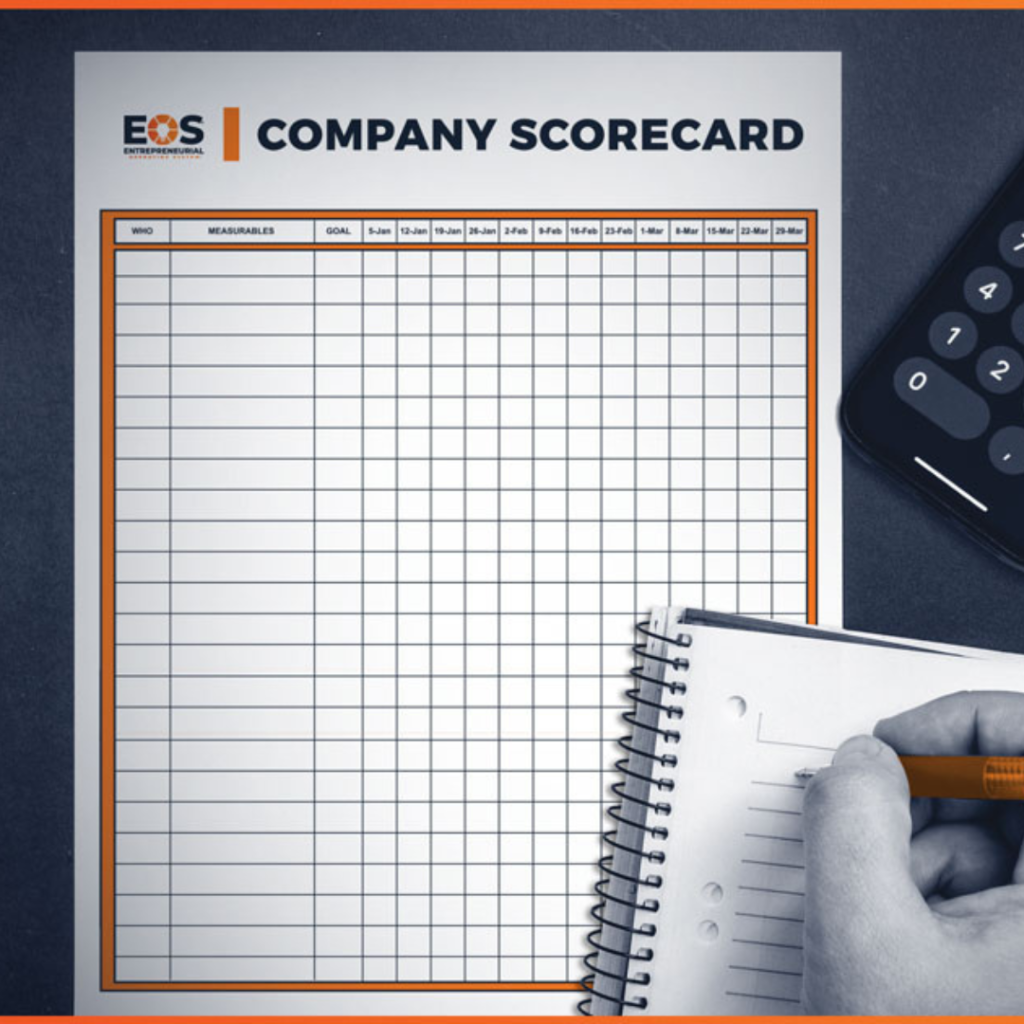
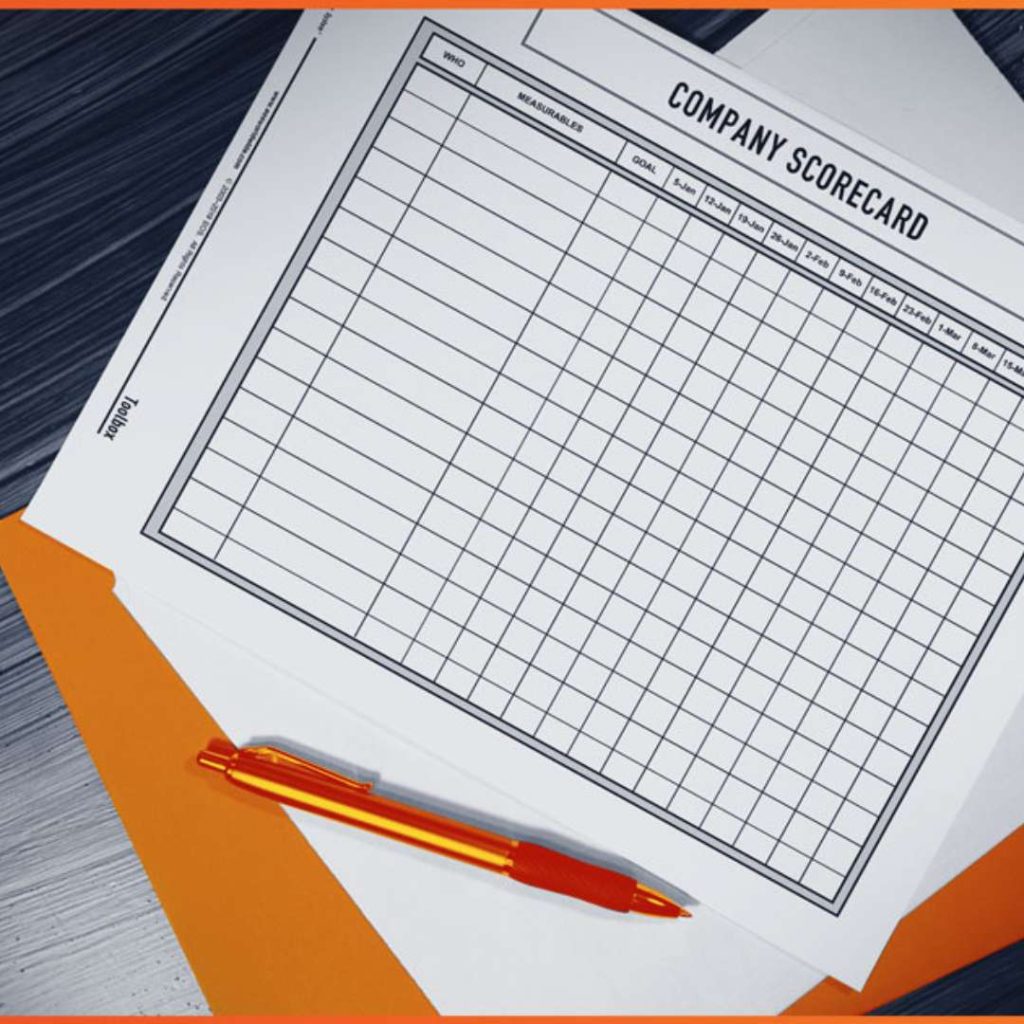
That’s how we do scorecards, EOS style.
If you’re self-implementing or just starting on your EOS journey, be aware that it will take some time to get the ideal scorecard. The best advice I can give is to just get started.
Once you start measuring, then every 90 days, you can review & start to adjust to give you the data you really need.
Scorecards can (and maybe should) change every 90 days, depending on the business’s focus.
I’m always happy to answer any questions & help with developing scorecards if you are stuck – just email me.
PS: You can also refer to the previous article that I wrote, click here.