Better Business, Better Life – Issue 202


I’m in Fiji this week for the Business Blueprint Fiji 2026 International Conference, where I delivered a headline talk on “The Science of Scaling & How Not to F*ck It Up.”

And here’s the irony.

Most businesses don’t struggle to scale because they lack ideas, ambition, or even capability.

They struggle because they make things more complicated than they need to be.

Which is why this line stopped me in my tracks this week: complexity is a symptom of avoidance.

Businesses rarely become complicated overnight.

BUSINESS TOOLS & REAL-LIFE LESSONS

When a Business Gets Complicated, Look for What’s Being Avoided

Complexity creeps in quietly. One extra process here. One exception for a customer there. Another layer of reporting. Another metric on the scorecard. Another workaround to accommodate someone who is not quite cutting it.

Before long, the business feels heavier than it should. Slower. Messier. More frustrating.

And here is the uncomfortable truth: complexity is often a symptom of avoidance.

Not incompetence. Not lack of effort.

Avoidance.

I see this often in growing businesses, & especially in family businesses.

The business starts tying itself in knots, not because people are incapable, but because nobody has addressed the real issue at the source. So instead, they build structures around it.

A few years ago, I worked with a leadership team whose weekly reporting pack had become, quite frankly, ridiculous.

Every week, they produced pages & pages of numbers. Sales figures, pipeline updates, operational reports, team performance snapshots, project trackers, cash flow data, customer issues, overdue items, & enough commentary to send even the most committed leader reaching for a stiff drink.

The team said they needed all of it to stay on top of the business.

But when we sat down & worked through it properly, it became obvious that most of the reporting was not driving action at all. Very little was being used to make decisions. The same issues appeared week after week. The same explanations were repeated. Everyone was busy producing information, but not necessarily managing the business better.

So we asked the harder question.

What are you actually avoiding?

The answer was not a data problem. It was a leadership problem.

They had not agreed on the handful of numbers that really mattered. They were avoiding making clear choices about priorities. They were also sidestepping accountability, because if everything is important, then nobody really has to own the few things that matter most.

All that reporting was giving them the illusion of control. It looked diligent. It looked thorough. It looked like good management.

But in reality, it was complexity disguising avoidance.

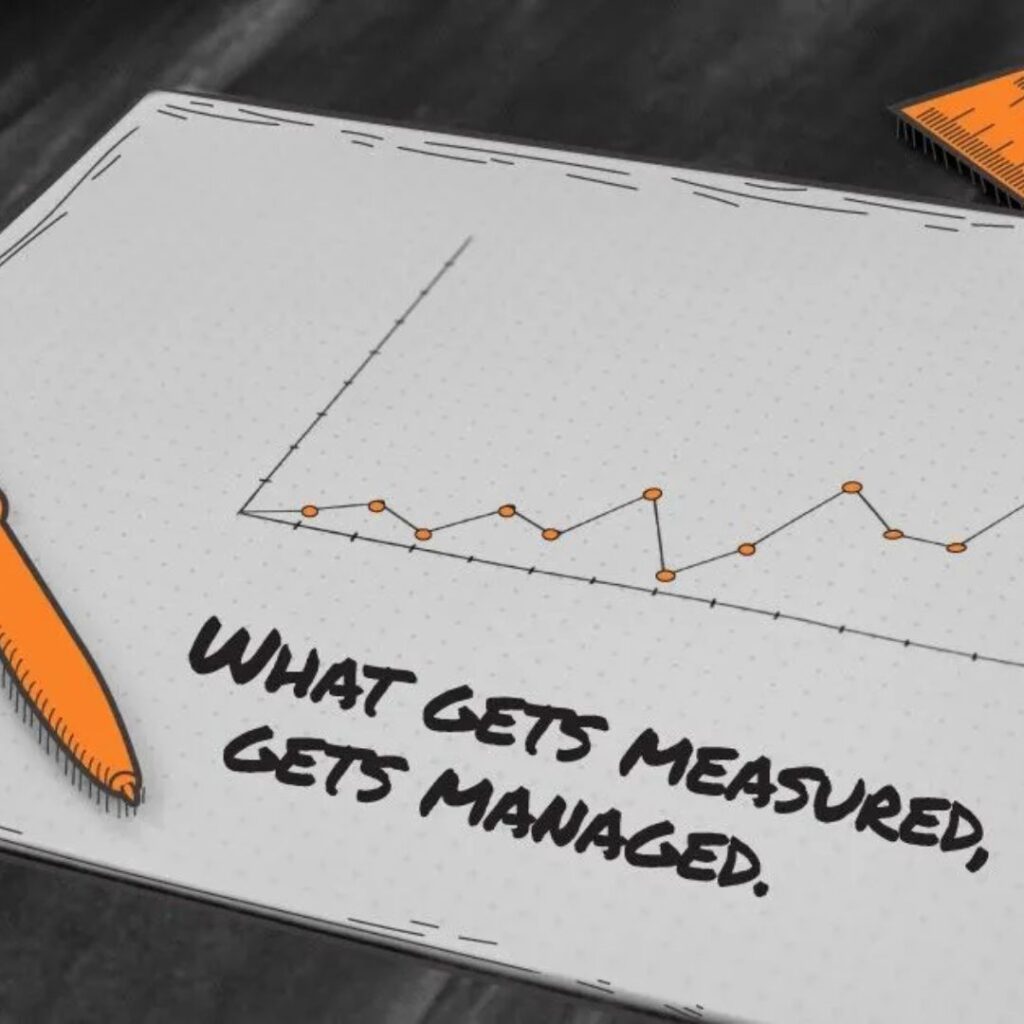
Once they stripped it back to a simple scorecard with a small number of meaningful measurables, everything changed. Their meetings improved. Their decision-making sharpened. Accountability became clearer. And perhaps most importantly, the noise dropped.

Nothing magical had happened.

They had simply stopped hiding behind complexity & dealt with the real issue.

This shows up in all sorts of places.

We redraw roles & responsibilities because we do not want to confront the fact that someone is in the wrong seat.

We add layers to processes because we do not want to address the underperformance sitting underneath them.

We keep bending for difficult customers because we do not want to have a firm conversation about expectations, boundaries, or whether they are the right fit at all.

We fill our businesses with workarounds because they feel easier than honesty.

That is the trap. Complexity can feel productive. It can even look sophisticated. But often it is simply what happens when leaders do not tackle the uncomfortable thing in front of them.

And complexity is expensive.

It slows execution. It muddies accountability. It drains energy from good people. It makes scaling harder than it needs to be. Then leaders assume the business is the problem, when often the business is simply reflecting the discomfort they have not yet dealt with.

So if something in your business feels more complicated than it should, pause before adding another system, another step, another report, or another meeting.

Ask yourself:

  • What are we avoiding?
  • What conversation have we not had?
  • What decision have we postponed?
  • What are we tolerating that we should be addressing?

Because simplicity is not simplistic. It is leadership.

And simplicity usually sits on the other side of a hard decision, a brave conversation, or a willingness to stop tolerating what should never have become normal.

The next time your business starts feeling more complicated than it should, do not ask first, “What system do we need?”

Ask, “What am I avoiding?”

Because complexity is rarely the root cause.

More often, it is the signal.

Where has complexity crept into your business, & what might it be trying to tell you?

LINKS TO USEFUL STUFF

This section gives you quick access to 3 links - to articles, blogs, podcasts & stuff that will help you to create a better business & lead a better life.

Better Business and Life Resources

Article

business action

Lack of a Good Scorecard = Avoidance of Accountability

Use the EOS scorecard to avoid lack of accountability.

Podcast

business action

Data Scorecards and Why Everyone Needs a Number

Stop guessing and use numbers to drive better decisions.

Life Stuff

business action

How Your Evening Wind-Down Shapes Your Mindful Life

Build a calming evening routine to improve wellbeing.

MEET OUR TEAM

This week, I’m bringing back Stanley Henry – & he’s got stories to tell.

Stanley is the driving force behind attn:seeker, where bold ideas meet real-world execution. He’s someone who doesn’t just talk about attention – he knows how to earn it.

I’ve been working alongside Stanley & his leadership team as they continue to build & evolve their business, & one thing is always true there’s never a dull moment.

This time, he’s sharing what’s really happening behind the scenes. The wins, the lessons, & the realities of growing a fast-moving creative business. No fluff, just straight-up insight from someone who’s in it every day.

business action

What makes your approach unique in your industry?

We don’t treat social media like advertising. We treat it like television. Every brand we work with gets recurring characters, storylines, and narrative arcs that people actually want to follow.

Most agencies are still posting pretty graphics and hoping for the best. We’re building shows. That’s why our clients consistently go viral without spending a cent on paid media. We believe attention is earned, not bought, and organic content is the most undervalued channel in marketing right now.

Can you share a success story where you made a significant impact for a client?

Fresh Start Advisory is a buyer’s agency in Melbourne. They were stuck at 15,000 followers posting solid educational content, but it wasn’t bringing in new eyeballs. We didn’t scrap the education. We built an acquisition layer on top of it. We created a simple anchor series: their Social Media Manager gambling against her boss to prove her $100K strategy was better than his property investment strategy. It was deliberately ridiculous.

At a time when kids all over social media were promoting gambling as a legitimate way to make money, we flipped it and took the piss out of it, turning it into entertainment. People loved it. As the audience grew, we layered in a 100K follower challenge with her boss, and within two weeks, the account hit 110,000 followers and 50 million views in just 20 days. The educational content then did its job, servicing all the new audience coming in. Acquisition through entertainment, retention through education. That’s the model.

What challenges do you see your clients commonly face, and how do you help them overcome these?

The biggest one is the belief that social media needs to look polished and “on brand” in a traditional sense. That thinking kills engagement. We help clients get comfortable being entertaining, being human, and showing personality. The brands winning on social right now aren’t the ones with the biggest budgets. They’re the ones brave enough to stop acting like brands and start acting like creators.

What trends are you noticing in your field, and how do you adapt to stay ahead?

The creator economy and brand marketing are merging. The line between a content creator and a brand account is disappearing, and the brands that understand this will dominate the next decade of attention.

We’ve been operating this way for years, so we’re already ahead of it. We’re also seeing AI reshape content workflows, so we’re building systems that let us move faster without losing the human creativity that actually makes content connect.

What is the most common mistake you see businesses make, and how can they avoid it?

Trying to sell on social media instead of trying to entertain. People open TikTok and Instagram to be entertained, not to be sold to. The moment your content feels like an ad, you’ve lost. The fix is simple but hard: make content that would still be interesting even if your product didn’t exist. If you can do that, the sales follow naturally.

We are here to help you live a better life by creating a better business. We are real-life business owners with years of experience & a strong desire to make a huge difference to the lives of entrepreneurs.

If anything here resonates with you or you would like our help, then please get in contact. Just reply to this newsletter & let us know who you would like to speak to…. Or visit our webpage & contact any of our team from their own pages.

If you know someone who would benefit from reading this, then please forward it onto them. 💖

NEED HELP?

​If you’d like to learn more about any of these tools or would like to find out how I can help you achieve a better life through creating a better business, then book a free Discovery Call with me.

We’ll talk about what you want to get from your business & your life & come up with a plan to do that!

Debra Chantry-Taylor

Certified EOS Implementer | Accredited Family Business Advisor | Entrepreneurial Leadership & Business Coach | Speaker & Workshop Facilitator