And it showed in their execution.
Last quarter, that team completed three of its four Company Rocks & had made strong progress on the fourth.
Around the same time, I worked with another leadership team.
The two businesses are a similar size, operate in similar industries & have been running EOS® for the same amount of time. This was not a case of one team being further along in its EOS journey than the other.
We followed exactly the same Rock-setting process.
This time, when everyone shared what they believed the most important priorities should be, the list ran well into double figures.
These were not simply different ways of describing the same three or four priorities. They represented a wide range of competing views about what the business needed to focus on next.
The team worked through the list, trying to keep, kill or combine the ideas. Eventually, they reduced it to a smaller number of Company Rocks, with several more priorities pushed down into departmental Rocks.
But putting several separate priorities under one heading does not magically turn them into one Rock.
Sometimes, all we have done is take a long list of Rocks & pretend it is a short one.
That team had also struggled with Rock completion in the previous quarter. They achieved just 16% of their Rocks, nowhere near the required 80% completion rate.
So, after turning another long list of potential priorities into a handful of Company Rocks & an equally ambitious list of departmental Rocks, guess how many are likely to get done this quarter?
I genuinely hope they prove me wrong.
But reorganising the list will not improve the completion rate unless the team deals with the real issue underneath it.
Rock Setting Does Not Create Misalignment. It Reveals It
This is not about one team being good & the other being bad.
Both teams are full of capable, committed people who want the business to succeed.
The difference is alignment.
One team had a shared understanding of the plan & what mattered most over the next 90 days.
The other had several different versions of the plan sitting around the same table.
That is why one team found its priorities obvious, while the other found almost everything urgent.
When a leadership team is genuinely aligned around its Vision, 1-Year Plan & 3-Year Picture, Rock setting becomes much easier.
There will still be debate, & there should be. But the debate is usually about sequencing, ownership & how the work will be completed.
It is not a debate about which direction the business is actually heading.
When a team is not on the same page, each person naturally brings the priorities from their own seat.
Sales brings the things Sales needs.
Operations brings the things Operations needs.
Finance brings the things Finance needs.
Everyone may be right from the perspective of their own seat, but that does not automatically mean they are prioritising for the business as a whole.
The result is not really a list of Company Rocks.
It is a collection of departmental wish lists.
Not Everything Important Is a Rock
This is where teams often get themselves into trouble.
Not everything that matters needs to become a Company Rock.
Some things are business as usual. Some belong as departmental Rocks. Some are To-Dos. Some are Issues that need to be IDS®-ed. Some are good ideas that simply do not belong in this quarter.
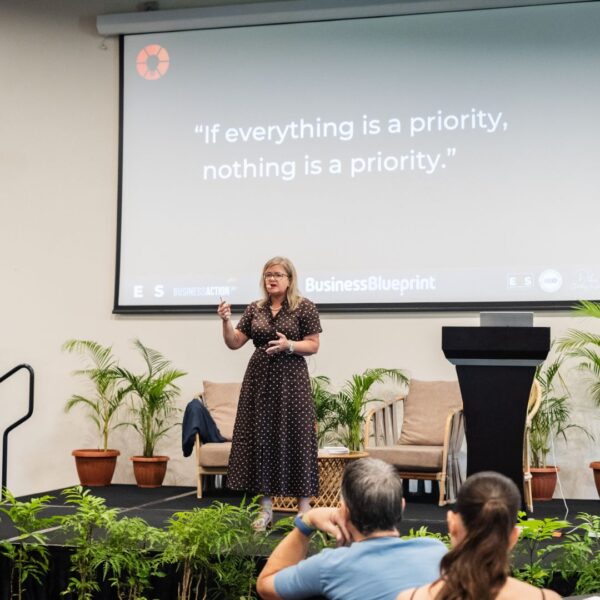
If everything is important, nothing is important.
The carefrontational thing to do is not to make everyone feel better by squeezing a long list of priorities into a handful of overstuffed Rocks.
It is to stop & ask why the leadership team sees the next 90 days so differently.
Are we genuinely clear about where we are going?
Do we agree on what must be true by the end of the year?
Which three or four things, if they do not happen this quarter, will put the plan at risk?
What are we prepared not to do yet?
That last question matters.
Prioritising is not just deciding what you will do. It is deciding what you will not do right now.
Clarity creates confidence. It also creates focus, accountability & a much better chance of actually finishing what you started.
Your Rock list is more than a planning tool.
It is a diagnostic.
If your leadership team independently comes up with the same few priorities, that tells you something.
If the team comes up with a long list of completely different priorities, that tells you something too.
Do not hide that message by combining the list until it looks manageable.
Use it to start the conversation your team actually needs to have.
Is Your Team Really on the Same Page?
If your Quarterly Planning Session is producing too many priorities, overloaded Rocks & another quarter of disappointing completion, the problem may not be execution.
It may be alignment.
At Business Action, we help leadership teams get clear about where they are going, agree on what matters now & build the discipline to get it done using EOS®.
If your team is pulling in several different directions, let’s have the carefrontational conversation needed to get everyone back on the same page before another 90 days disappear.