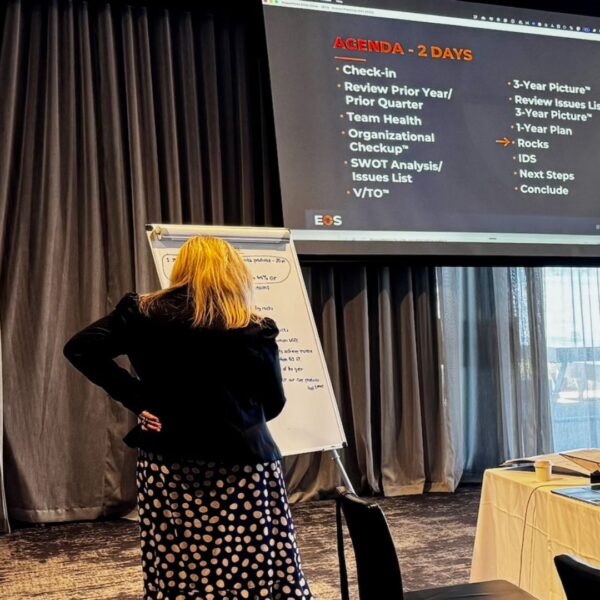
That gave us time to get underneath the issues rather than rushing through them. We could challenge assumptions, have the conversations that needed to be had & solve the things that were genuinely getting in the way.
We also had time to properly shape the Rocks for the next quarter. We did not simply throw a collection of tasks onto the page because everyone was tired & wanted to go home. We could ask whether each Rock really mattered, whether it supported the company’s priorities & whether it was clear enough to be completed successfully.
The second team arrived with almost nothing prepared.
We had to work through the results painfully, piece by piece, trying to establish what had happened. We spent time working out whether Rocks had actually been achieved, looking for numbers & collecting information that could have been prepared before the session.
They had done very little thinking about the next quarter, so we were effectively starting from scratch.
The session ran for eight hours, but we still did not feel as though we had spent enough time on the important work. Instead of having three solid hours to IDS, we probably had somewhere between one & two.
By that point, people were tired. The quality of the conversation was dropping & there was a sense that we had been busy all day without getting far enough into the issues that really mattered.
Same process. Similar amount of available time. Same number of people on the Leadership Team. Two completely different experiences.
The difference was preparation.
Your Quarterly Is Too Valuable for Fact-finding
A Quarterly Planning Session is not the place to discover what happened during the previous quarter.
It is the place to understand why it happened, decide what needs to change & agree what matters most over the next 90 days.
Those are very different activities.
When leaders arrive without accurate financials, clear Rock updates or any thought about the coming quarter, the session becomes an expensive information-gathering exercise. You have some of the most senior & highly paid people in the business sitting together while they search through reports, question one another’s recollections & try to reconstruct the past.
That is not strategic leadership. It is a very expensive search party.
The work of gathering information should already have been done. The leadership team’s time together should be spent interpreting that information, making decisions & solving the issues that cannot be solved by one person sitting alone at their desk.
Preparation Is a Leadership Responsibility
Preparation is sometimes treated as administration. It is not.
It is part of the job of being on the leadership team.
Every leader should arrive knowing the status of their Rocks, understanding the relevant numbers & having considered the biggest issues facing their area of the business. They should also have given some thought to what the company may need to achieve next.
That does not mean every decision has already been made. In fact, the opposite is true.
Good preparation creates the space for better debate. When everyone has the facts, the team can spend its time discussing what those facts mean, where the real problem lies & what they are going to do about it.
Before the next Quarterly, the leadership team should have:
- Finalised & circulated the financial information, with any significant variances highlighted.
- Reviewed every Rock & agreed whether it is complete, incomplete or requires further discussion.
- Updated the Issues List so the biggest concerns are already visible.
- Individually considered possible Rocks for the next quarter, based on the company’s priorities rather than individual wish lists.
The Quarterly should not be the first time anyone has thought about the next 90 days.
Preparation Affects Energy as Much as Time
The difference between these two teams was not only how much they achieved. It was how they felt at the end of the day.
The prepared team finished earlier, but they also left with more energy. They had spent the day making progress. They had agreed clear priorities, solved meaningful issues, & had confidence about what came next.
The unprepared team spent longer in the room but left feeling as though there was still important work unfinished.
That matters.
When a leadership team spends most of the day looking backwards, chasing information & debating basic facts, frustration builds. The team eventually reaches the most important conversations when everyone has the least energy available to have them.
Preparation changes the rhythm of the entire session. It allows the team to move through the review efficiently & preserve its best thinking for the issues, decisions & priorities that will shape the coming quarter.
Really Good Teams Solve Issues Quickly & Permanently
Strong leadership teams do not spend hours repeatedly circling the same information. They identify what is really going on, discuss it honestly & solve the issue quickly & permanently.
That requires time.
It also requires enough mental energy to challenge one another, consider different perspectives & make decisions that may not be easy.
When the first half of the day has been wasted establishing facts that should already have been known, the team loses both the time & the energy needed to do that well.
That is the real cost of poor preparation. It is not simply that the meeting runs longer. It is that the issues with the greatest potential impact on the business may be rushed, deferred or never properly discussed.
Do The Work Before the Work
Before your next Quarterly, ask one simple question:
What can we review, verify & think through before we walk into the room, so that our time together can be spent on the conversations only this leadership team can have?
Come prepared with the facts. Know where the previous quarter landed. Think about what the business needs next.
Then use the session for what it is actually intended to do: create clarity, solve important issues & make the decisions that will move the business forward.
Clarity creates confidence. Preparation creates the space to find it.