

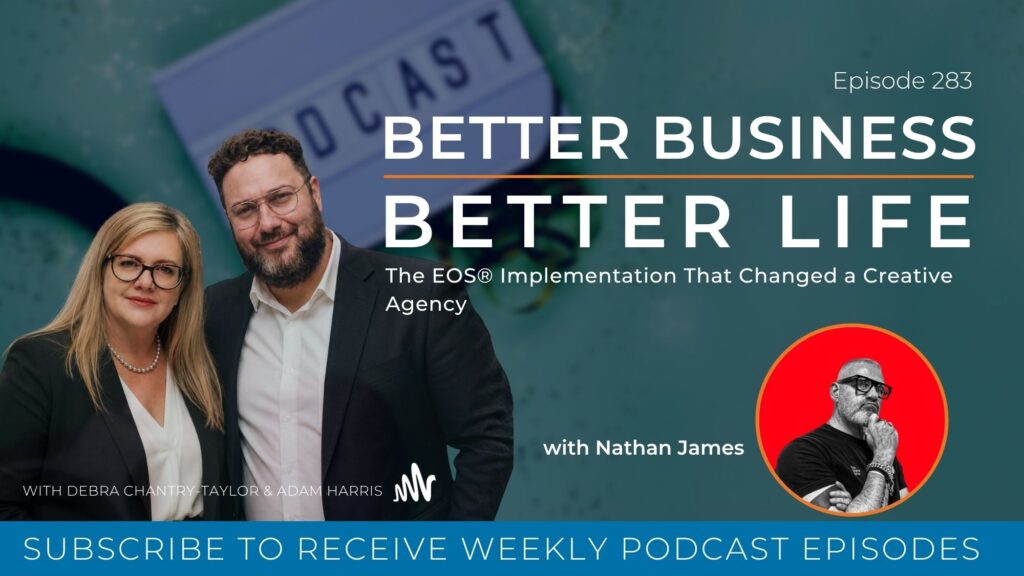
Top Tips from Nathan James:
1. Never Stop Learning Or Trying:
“Never stop learning or trying. At 53, I work in a social media agency where the average age is 24. That is only possible because I have remained open-minded about learning and have been willing to admit when something I believed was right is actually wrong. You have to keep learning the new things and adapting as the world changes.”
2. Drop Your Ego And Support The Right People:
“You have to be able to drop your ego when the situation requires it. It does not matter how old someone is, what title they have or whether they are junior to you. If they are the right person for the role and they are helping the business succeed, support them and let them do their job. The greater good of the business is more important than hierarchy, status or who reports to whom.”
3. Take The Pressure Off Because Material Things Do Not Matter:
“Bankruptcy taught me that many of the things people worry about do not actually matter. I am healthy, I have a roof over my head, I have a car and I can eat. More money might give you a bigger house, a more expensive car or better food, but they still serve the same basic purpose. Status and possessions will not create lasting happiness. Focus instead on being happy within yourself and doing work you enjoy with people you enjoy.”
SUMMARY KEYWORDS
Entrepreneurship, social media agency, accountability chart, bankruptcy, creative director, London School of Fashion, advertising industry, business model, EOS, personal brand, social media content, core values, transparency, business structure, ego reduction.
Nathan James 00:00
Never stop learning or trying. Like I’m, I’m 53. I’m in a social media agency. The average age here is 24. That shouldn’t be happening, but that’s because I’ve constantly been open-minded about learning. We’ve changed the business model several, four or five times in the time that we’ve been working with EOS. We always go back to the accountability chart because it really helps us like establish who’s responsible or who’s accountable? The bankruptcy thing taught me so much around. Doesn’t fucking matter. Like I’m healthy. I’ve got a house. I rent it, but I got a house. I have a shitty car, but I’ve got a car.
Debra Chantry-Taylor 00:38
Debra Chantry-Taylor and I’m passionate about helping entrepreneurs lead the life that they love, and for me, that is doing what you love with people you love. And so today’s guest is a really special guest. He’s a very dear friend of mine. He is a client of mine. He has run his own business. He’s now the creative director of another agency. He’s got a really interesting background. He has he’s went to the London School of Fashion, the same school that Alexander McQueen came from. He’s dated an actual princess in Sweden, and he’s worked in London, Stockholm, Amsterdam, New York, and now Auckland. And today he is going to share with you how he came back from bankruptcy, let go of ego, and is now truly doing what he loves with people he loves. So please welcome to the show Nathan James, better known as Nate, who is the creative director of the Attention Seeker. As I said, he’s also a client of mine, a good friend of mine, and an all-round good bloke. Welcome to the show, Nate.
Nathan James 01:34
Lovely to be here, Debra. Absolutely, absolute pleasure. As always.
Debra Chantry-Taylor 01:39
Ah, thank you, thank you. Hey, um, you have a really interesting background in terms of your story about how you’ve got to where you are now. So you have been in the advertising game for a long, long time. Where did you start? Where did you actually? When was your was your original kind of story?
Nathan James 01:59
I started in London in 1995. Ouch! I was a lucky. I’m not a lucky child as such, but circumstances within my childhood made me grow up very quickly. And part of that, I think, was that I knew really early on, what I wanted to be or do, and that was I wasn’t really sure of what it looked like, but I knew it was something to do with video or film or creative things. So from a really early age, I was fully aware that I was going to work in this industry in some form, or film industry, or something like that. So I decided that to do to do that, I didn’t really need to go to college as such. I needed to go work. However, I decided that I wanted to go to college because it was fun. So I actually went to the London College of Fashion. I went to the London College of Fashion, the same College of Fashion from which, oh my God! What’s his name? God, the UK really famous UK man designer. God, I can’t remember his name.
Debra Chantry-Taylor 03:09
I’ll come to you. I don’t know, but I’ll come to you. Yeah.
Nathan James 03:11
In and it was on the corner of Regent Street and Oxford Street in London, and I did a fashion degree. Well, I say I did a fashion degree. I did as little as I possibly could around the fashion degree and ran the bar, which was really interesting. Looking back, I’ve no way. Well, I know how I went. Actually, went for a film and a film and theatre design course, and the it was so weird, so inappropriate now and so weird. But they basically said to me, “I was doing my interview, and during the interview, they were like, ‘Are you interested in fashion? I was like, ‘Well, yeah, look. And they they literally said this, which is awful. They said, ‘Oh, because just because we really under-index on straight males, we’d really like some straight males to do our fashion course.
Debra Chantry-Taylor 03:57
So you were the you were the token straight male.
Nathan James 04:00
There was six gay guys, me, and 230 something ladies, so I was literally the the token the token straight guy at the college. Yeah, but anyway, so I left fashion school, and then I was like, right, I’m going to do what I was going to do originally. So basically, in back in the old days, you remember this, I took my CV around to production companies in Soho, in London, and just literally looking for a job, got a job in this little production company, and it was wasn’t very busy. It was in Soho Square, and I was doing odds and ends, getting photo copying, getting sushi, making tea, just dog’s body effectively, which which is how you did it. Then you had to learning a lot, and I did a few like production jobs, and then this little agency moved in upstairs. There was a floor above which was empty at the time, and the the production company obviously sublet because it made was good good business sense, and they sublet to this little agency which happened to be called Mother. And if you’re if you know advertising and. Shape or form from around our era. Mother was the by far the coolest agency in London. It just started, so I was their first employee, and as a result of that, and I got employed as a runner for them, and then I ended up doing writing and started to do a bit of art direction, etc. etc. But as a result, I worked literally was the only person that worked for this coolest agency. Well, literally the only person outside of the partners that worked for this cool agency, and then after a year when they’d grown and we’d got well two maybe two years after they’d grown and got really famous, I got poached because I worked for this really cool advertising agency. I got poached by another really cool advertising, and that’s where it started. And luckily, because I’d worked for the cool ones, I just kept getting to work for the cool advertising agencies, and that was the start of my career.
Debra Chantry-Taylor 05:43
So that was in the UK, but you haven’t just worked in the UK, right?
Nathan James 05:46
No. So yeah, so I moved. I went through the second agency I worked for. I was there for five years, and they decided it was wise to set up an operation in Sweden. And they basically asked the staff if anyone wanted to go to Sweden. So I was like, “Yep, I’ll go to Sweden. I went to move to Stockholm. Worked there for a year and a half. The agency that set up from London didn’t realise that their new and fresh model was already the model that was in Sweden, so it failed miserably. They made me redundant, which was awesome because they were lovely and rich, and they gave me a whole tonne of money. And so I went. I just basically went travelling for a few years, and then I came back, worked in London for a bit. Then I got approached by a company called RJ, which is a American agency run by a guy called Robert Greenberg. He was responsible for the special effects on Superman, Aliens, like all those old school 70s, 80s movies. And he had a he basically he was a guy that mutated his business every. He had the policy of every six to seven years he’d completely change his business. It was really interesting. So he had a special effects business and he did Superman, Ali, and all those things. And then seven, eight years later, he decided to set up like a digital business making websites. So he did that for seven years, and then he transformed into an app company. So he worked. When I joined, we were doing Nike Plus, like doing Nike stuff, and a lot of online. Went to work for them in London to set up their operation there, and they had an office in New York, so that ended up me being in New York for a year and a half. Then I came back to London, and I was there for a couple of years, and then I went to Amsterdam. So I worked in Amsterdam, and then I came back to London, and and then I came to Auckland. So yeah, technically London, New York, Amsterdam, Stockholm, Auckland.
Debra Chantry-Taylor 07:32
Ah, there you go. So yeah, and why Auckland?
Nathan James 07:36
I had two children, and if you’re from if you’re from the UK, well, you know this. If you live in London and you want a school, you have to insert yourself into that area for at least I think five years prior to the school because there’s just such a lack of schools. Having travelled a lot and not lived in London for any prolonged period, we couldn’t get school effectively. We couldn’t find a school for our kids. And my wife at the time and I, she’s a Kiwi, so I met her in London, but she was a Kiwi, so we decided to bring our kids here to give them a life and a good schooler.
Debra Chantry-Taylor 08:07
Nice.
Nathan James 08:08
Like you did 14 years ago,
Debra Chantry-Taylor 08:10
and so your career over here. So you worked in traditional advertising agencies or so? Yeah, when
Nathan James 08:16
I moved here, I was went to Satsinsatchi and I because I’d done a lot of in in my career, I was kind of lucky in the respect that I realised early on in my career that that old like art director copyright. I was a copywriter at the beginning of my advertising career. That model was I I’d noticed at the time that was particularly outdated because what I found was I was just working with the same person. We were kind of doing the same thing. We got very comfortable. It was real easy. We knew each other’s heads. Like it was just a became a thing after a year or two. It was like, hang on a minute, I’m not really learning. So I I detached myself from that model and I became like a. It was quite rare at the time. I was just a creative person. I wasn’t an art director. I wasn’t a copywriter. And so what I did is I linched onto limpeted onto people that I wanted to learn from. So if I was doing animation, I’d just work with an animator. Doing a website, I’d work with web developers, and that was quite rare at the time. But what that meant for me was that I was learning so much because I wasn’t just working with the same person every day for my career. I was literally working with different people and different skill sets. So I basically picked up a whole lot of experience in areas that generally people that do what I do. Don’t get.
Debra Chantry-Taylor 09:22
I was just asking if you started a traditional advertising agency because obviously you’re in a different world now. Yeah. Yeah.
Nathan James 09:27
So I started doing like copywriting. I was doing TV commercials, posters, print, all of the traditional stuff. Then I moved into what they used to call digital, which was web builds, like websites, microsites that don’t exist anymore, that kind of stuff. Then obviously, like working with Nike on Nike Plus. I was doing app development, like I was just doing everything really. And then I got into content production, so I learned how to. I was a commercial director actually, as a commercial director in London for a year. I shot for PlayStation, Carl, like big brands. I got into camera work, so I could camera operate. I got to edit. I got to learn After Effects. Like I just managed to. Somehow find myself in all these positions that taught me everything. So when I came here, I was a bit of a kind of a jack of all
Debra Chantry-Taylor 10:06
generalist.
Nathan James 10:07
Yeah, and that’s a really rare thing in traditional agencies. Like generalists don’t really exist because they don’t trust you to do like if you work for a big corp advertising company and you’re a copywriter, you’re not allowed out of your box almost. But anyway, I came here and I went to such a Nikki Bell, who ran such at the time, was quite open to that general listing. So I was actually I was the head of digital, I think, or digital creative director when I came. Worked at such and such a couple of years, and I went to TWA, which is another big agency. There, I was the con. I was they tried to make because they had a digital agency and a traditional agency, and they kept butting heads, which happens. And so I went into TBR Day to try and fuse them together because I knew both sides of the equation. And I stayed there, and then they lost business. A lot of people left. I tried to leave, and they told me that I wasn’t allowed to leave. So they paid me my entire full salary for three days a week to keep me. That was for a whole year. So those two days a week that I wasn’t working for them, I was getting paid my full salary. I just set up my own business, and then I had my own business, a little content production advertising company, for five years, which I sadly lost as a result of some very bad business decisions and COVID.
Debra Chantry-Taylor 11:19
Would you mind sharing a few of those bad business decisions? Because I always think we learn so much more from our failures, don’t we?
Nathan James 11:23
Oh my God! I was the classic. I’m really good at what I do. I’m just going to open a place that does it, and all these people will come and pay me to do it. Woohoo! Which, to be fair, kind of worked for about three years. And again, next big bad decision. I had no idea how to run a business. I didn’t really understand what cash flow was. I didn’t really think I needed to save any money. As soon as I got paid, I’d buy a new computer. Like I, I bought, I got a really fancy office that was really cool. That cost me $12,000 a month for three people. It was beautiful. All of the things that all of the people that you know about just those classic mistakes. So yeah, got myself into a position where I was actually turning over 1,000,001, and a half million a year, pretty much for a couple of years. But I didn’t save any money. I just like kept spending, and it wasn’t on anything that was going to actually bring me revenue. It was an office. It was a fancy chair. It was a. This looks great. Everyone’s going to love this office. They’re going to come and pay me more money. And I didn’t, I didn’t have a pipeline. I didn’t really have a new business strategy. Like I didn’t really network. I just expected everything to come to me. And it got to a point where I, over the period of a month, I lost my two biggest clients. One of which was FreeCore. So I’d work working with like their water brand. So Ends End Natural Go is it Go? I can’t remember what it’s called. There’s a water brand, one of the water brands. So I was working with my zone. I was working with the water brands. They decided that I was the only agency outside of their networks, so they pulled that. That wasn’t my client’s decision. That was an upstairs decision. So it wasn’t really anything that I did, but it was just business. And then I had MyRepublic, which was an internet company, and the contact there that I had was the head of marketing. She left her job, and the new person came in and said, “Oh, I’ve got my own set of people that I want to work on this, which is classic. And then COVID hit, and I had part of my business was a studio. I had a studio space that I’d rent out, so that revenue disappeared as well. So effectively, in a month, lost my business, and it bankrupted me. I got bankrupted.
Debra Chantry-Taylor 13:27
Really? Okay.
Nathan James 13:28
Yep. I got debt in the business because, again, I hadn’t made the right choices and ended up bankrupt.
Debra Chantry-Taylor 13:33
So, I mean, it’s it’s done and dusted. You can’t take it back. But what what do you think you would do differently if you were to go back and revisit?
Nathan James 13:40
Well, now having worked in a business that’s very transparent and has taught me, I would have a cash flow. I would network. I would have a pipeline. I would do all the things that a regular, probably attempting to be successful business would do. I would definitely have an EOS. You know, I’d have like I would. I’d have all the things in place that meant that I understood the health of my business, not in not in respect of how new my computer was or how nice my chair was, but as in respect of what’s happening in the next three years. Like, where am I going? What’s my what’s actually happening in the next three months? What do I need to do to make sure that I’ve got money in the bank to pay my staff and my overheads in the next, you know, week on week out, and then projection forward.
Debra Chantry-Taylor 14:29
Those really important things like data and measurables, right? 100%
Nathan James 14:32
I had none of that. I literally had none of money to come in. I’d give it like do the zero. Yeah, that’s great. That’s great. I can get away with buying another PlayStation. I can do this. I can do that. Right. Everything was expensive. Just did it all, and then I just was like, “Nah, fuck it.
Debra Chantry-Taylor 14:43
Hey, I think we’ve all been there, and it’s not a bad thing. I think as long as you take the lessons from it, that’s the most important thing.
Nathan James 14:49
Biggest lesson I learned from it was that it doesn’t matter. I know I don’t mean that in a frivolous way, but just so many of my friends have fretted and fretted and fretted about their business. Oh my god, I’m going to lose this. I mean, this is going to happen on my. Got my car and my mortgage and my da da da da da. I haven’t been through a bankruptcy. It just taught me that it doesn’t matter. I’m still here. I’m still me. I’ve still got a roof over my head. I’ve still got a car. It’s a shit car, but I’ve got a car. You know, like the like my kids are fine. Like really, most annoying thing about being bankrupted was they wouldn’t give me a chip and pin card. I had to have I had to have one of those old cards that you had to have a pin number for. You couldn’t I couldn’t just like do tap and go. That was the probably the most difficult thing about my because
Debra Chantry-Taylor 15:30
you were bankrupt. Oh,
Nathan James 15:32
and this is so funny. On the other thing, so when you’re bankrupt, you are not allowed to travel out of the country without permission from your trust. Or what’s it called? A, you have an officer, a bankruptcy officer. You have to get permission from the bankruptcy officer because the creditors want all the money they can get from you, obviously, which is fair. And so my creditor was my only one creditor was bank, so I had to get. I had to. My family’s in the UK. My sister was poorly. I had to go home, so I had to approach my bankruptcy officer and ask him if I could go home. This is brilliant, and he was like, “Yeah, that’s fine, but I need evidence of like spend expenditure. So, like, obviously the flights are key, but where are you going to stay? And I was like, “Well, I’m I can’t afford a hotel, so I’m going to stay with my mum. And he actually asked me to get a letter from my mum, so I got a letter from my mum to give to the bankruptcy man, who’s obviously the government, to to make sure that I could go home to the UK.
Debra Chantry-Taylor 16:30
How old were you at this point?
Nathan James 16:33
Oh my God, 48 or something.
Debra Chantry-Taylor 16:35
Oh gosh, that’s hilarious.
Nathan James 16:37
It’s priceless. Literally had a letter from my mum saying that I was allowed to go home. That’s so good. So good.
Debra Chantry-Taylor 16:42
Oh well, you you made it through, and that’s that’s the most important thing.
Nathan James 16:45
And I did learn the lessons. I literally learned the lessons. Like, and and also like, yeah, it’s a. I I see setting up a business in New Zealand is really easy, but now I know that it’s not easy to actually run and maintain and make a successful business. I’m very. I’ll be very reluctant to do it again. I may do one day, but I’m pretty reluctant to do that right now.
Debra Chantry-Taylor 17:04
Yeah, I understand. I mean, as you know, I’ve gone through that myself. I didn’t actually get bank, didn’t get through bankruptcy because I actually managed to pay off all of the debts over time, and yeah, fortunately didn’t have to go down that route. But still, it was massive. I mean, I lost my house, lost my car, lost everything, paid debt off for years and years and years afterwards, but
Nathan James 17:22
yeah, yeah, no, I tell you that it’s horrible. It’s absolutely horrible.
Debra Chantry-Taylor 17:25
But lessons learned. Okay, cool. So you’re now with the Attention Seeker, which is one of my EOS clients, being really upfront, and we’ve been working together for a number of years there. How did you get to be with the Attention Seeker? And tell us what what you do there.
Nathan James 17:36
Well, I came out of my bankruptcy, and I was just freelancing. It was actually a really nice time in my life. I didn’t have like nothing. I had a little house and a little car, and I was happy. And I was just doing freelancing jobs and getting by. And I didn’t really want to go back into agency world because of the generally very political environment. So I was kind of looking for something a little bit different, to be honest. And also having been like burnt by losing my business, I kind of wanted to find something that would teach me about that. You know, like something that would be an environment in which I could probably learn a little bit more about the other parts of what I needed in my life if I was to set up another business, not just the creative stuff. So I just held off really, and I was a funny story. I had a friend of mine in the UK called Kathy’s. a really old, long, old friend of mine. We talk quite regularly, and she was aware of my situation that I was looking for a job. And she was currently she was out of work, and she was quite sick, so she wasn’t working. She was kind of bored, so she decided to try and help me in my quest from the UK. Help me in my quest to find a job, And she sent me a video from this company called The Attention Seeker in Auckland that said you should try these guys. These look really fun, and it was a video that Stan and the team had made, which was actually really good. So I just hit him up and just said, “Look, I’m. This is who I am. I’ve got these disability. The job he was looking for, he’d called an executive creative director. He didn’t really want one of those, but that was what I was called. Like he didn’t really mean that. That was what I was called. So I just met him. We had a chat, and it just kind of worked. And then he managed to get to the point where he could afford me, and I joined.
Debra Chantry-Taylor 19:13
Perfect. Okay. And so the attention thing is a bit different in terms of agency, and obviously we’ve been working together for a number of years now. They’ve gone through several iterations, but it’s how would you describe what it is that you do?
Nathan James 19:24
Well, we effectively the business was built from a person stand. The owner was in hospitality, and he moved back to the New Zealand and didn’t have a job because he just didn’t have a job. So he just started posting on LinkedIn. Literally, just started posting on LinkedIn. I’m, and after a while, a couple of people went, “Oh, that’s good. You’re really good at that. And COVID was around at the time, so people couldn’t network. So it’s kind of a perfect storm where people like, “I can’t network. The the best alternative to that is to build my LinkedIn profile. I don’t know how to do that, so I’m going to get this guy to help me. So he started to generate clients, and so after a while, he had enough clients. To just start a little business doing personal brand for individuals who wanted to increase their network and therefore get business, and then over time he thought, “Oh, hang on a minute, we could try video because that’s part of personal brand to do really good social media across the board and video short form videos, big TikToks around, Instagrams around, give that a pop, and that started as being a social media company. We went through a lot of iterations. We bloated last year. We were up to 40 people. We’d taken on a designer. We’d taken on all these ad person. Like we sort of grown the business naturally, as you would. He’s very much a very kind of aggressive growth kind of entrepreneur, so we’d grown the business big, and then we kind of looked at it and went, “We’re not servicing anyone very well. We’re not doing the things that we’ve brought in very well, and as a result of trying to do those well, we’re not actually doing our core very well, which is effectively social media. So reduced, lots of people left. We didn’t replace them. We’re now down to 20, roughly, and we effectively do personal brand for a number of small clients, and we do short-form video content for a number of big clients. There’s a few middle clients, but they’re they’re less and less. So we work with the likes of Meridian, Pizza Hut, One NZ, those kind of big corporates that do social media, and we produce their video content effectively.
Debra Chantry-Taylor 21:23
Okay, and your your role there?
Nathan James 21:25
So I’m the creative director. I have been. I started as the executive creative director, and then I moved into a head of strategy role, and then I moved into the GM role, and then I moved back to the head of strategy role, and now I’m back to being the creative director. So I effectively oversee strategy and creative. So that involves all the presentations, ideas, and you know that kind of stuff. It involves production, so I oversee the production team, and then I, yeah, I oversee strategy. So I make sure that we’re like on point and we’re delivering on the client’s need effectively.
Debra Chantry-Taylor 21:56
And these iterations, I mean, I know that so Stan came to me, I think about three years ago, and sort of said, “Hey, look, can you give us a bit of a hand with the the structure of the business? And we brought EOS into the business. There was a bit of nervousness around. Oh, yeah, but this structure was it four years ago? Okay, good to know. I remember my
Nathan James 22:10
like. I literally was about four or five days into my job. I had to. I did EOS meeting. The
Debra Chantry-Taylor 22:14
first EOS meeting. Okay, there you go. Four four years ago. And through that time, you know, we’ve we’ve we’ve had lots of iterations of things. What do you think has been the power of US? Because there’s some nervousness in the beginning around, oh, you know, we’re a creative agency and we don’t need structure, we don’t need all this sort of stuff. We’re different. But what do you think has been the benefit of actually having a structured operating system?
Nathan James 22:36
Exactly what you just said. Like the fact that most creative agencies don’t think they need structure, but they’re not creative. They’re business, right? There’s a real like like my business, for instance. I just thought I could be creative, and people would pay me for it, right? Which is what most people think when they go into creative businesses, because they’re not that way inclined. I don’t think about numbers or money or serious things in the future. I just think about fun things right now. And so, what AOS has done for us has enabled us to still be a really creative company, but have a really solid backbone of understanding of where the business is at, where the staff are at. Like, what’s our projection? Like, where are we going? Why are we going there? What’s the big end goal? You know, like all of those things. And of course, that changes. Like, we if you look at our projections on that first one, second one-you know, like they’re so off, really. Like the big hairy, the big hairy things still kind of in play, but but at the end of the day, it’s just given us literally the two meeting, the the two meeting cadence of the level 10s. Like we have a senior leadership level 10, and then we have a team level 10, and then obviously they filter down. But those two meetings every week, I know exactly what’s happening in the business, as does the business owner, who doesn’t need to necessarily be involved in the day to day, right? And we’re autonomous. It makes us autonomous. It makes us know what how much money is coming in. It makes us know like the staff are healthy. We really do like nail those issues. Like what’s going on this week? What we need these problems here. We need to solve it. Those things in my business never happened. So I never noticed that this little issue that started two years ago had snowballed into this huge thing where I’d spend all my money on computers. Right. If if I’d AWS and someone had gone, hang on a minute, Nate, you’ve just spent like two grand on another computer. You don’t need another computer. I would have stopped doing that, and that would have saved me. So, yeah, it’s it’s twofold really. It’s like the the longer term kind of aim, that flag, but then really, I think that that that weekly, just understanding where everyone’s at and we’re hitting our targets just really means that you address what’s happening in the business and you don’t let things slip.
Debra Chantry-Taylor 24:45
It’s really interesting. I’ve been rereading the Rockefeller Habits because you know, yes, I do EOS, but I also keep on top of all the different kind of operating systems. And in the Rockefeller Habits, one of the things that was made really obvious is there’s only really two important things in the business, and the first one is what is the long. Goal, you know, if you don’t know where you’re going, any road will get you there. So where are you headed? That is super, super important, and almost everything else is unimportant apart from the short term. What are we going to do to move the needle? And so, if you can focus on those two things, then actually the business will grow. But a lot of people don’t have that.
Nathan James 25:17
No, those those are weekly OSs because they’re so structured. And this isn’t. I’m not trying to sell OS to anyone, but like those weekly OS meetings that are structured and we have a format means that we know exactly what to do to solve the problems. The forums there, you know. And increasingly, I’ve found that it does reduce the amount of corridor conversations. It does reduce the amount of like, oh, we need a meeting about this thing that’s just happened. That’s probably not that important. It feels important, but actually, if you just stick it on the list for the for the Monday morning meeting, it usually goes. It’s either oh god, that wasn’t really a problem, or it is such a problem. I actually need the right people in the room to deal with it, and that just doesn’t happen in normalised organisation because you’ll just have these like tiny little conversations, and nothing really ever gets solved because the people that need to solve the problem aren’t there; they’re just they’re busy. So you’re having a like water cooler moment, and it doesn’t work. You know that stuff’s so important. It’s just so important to us.
Debra Chantry-Taylor 26:10
So the big question: Has it taken away your creativity?
Nathan James 26:14
100% I’m just I just do no. Of course it hasn’t.
Debra Chantry-Taylor 26:19
I was about to end the podcast right there, right then, is like, come on, yeah, yeah. Of
Nathan James 26:24
course, it hasn’t. Of course, hasn’t. What it does, like, I have always said this thing, which people don’t like, which is, I am not actually a creative person. I am, I a creative person to me is a music, like a, I don’t know, J Cole or an art like Banksy or people who don’t have a brief. They’re creative. They make things up and they make beautiful things, or they make music, or they make stuff. My job is to take a client’s problem, navigate the obstacles that presented to me, and and create something that sells stuff for them effectively, which is a different. I use creativity to do that, but I’m not actually a creative. I’m a problem solver, right? And my problem solving involves a bit of creativity. But ultimately, if a client came to me and went, “I need to sell some chocolate bars, and I just did whatever I wanted to do, I wouldn’t sell chocolate bars. I need a strategy. I need a brief. I need to know like like the audience. You know those things. A musician doesn’t have a brief, a strategy, an idea of their audience. They just do something. They’re actually slightly different things. And so, in an agency where I where I need to problem solve, EOS is enabling me to do that better because it’s freeing me up from all the shit I don’t need to worry about, right? Or putting enabling me to compartmentalise the shit that I don’t need to worry about into this box over here that I can deal with on Monday morning, and so it just frees my time to do what I do. And so, if anything, it I think it just makes well. You know this in any business. It enables the business to do the thing the business is meant to do, and then all the other stuff’s just on Monday morning. Yeah, because I know now if I’ve got a thing, I just pop it into my little notes or whatever into my
Debra Chantry-Taylor 28:17
into your app. Yeah,
Nathan James 28:18
yeah, use my app, and I know that I’ll just be deal with it. I’ll just deal with it. On unless it’s unless it’s going to burn the house down right now, or we’re going to lose all of our clients tomorrow. I’ll just park it over there because not that important. So it just frees up my head to just do what I do.
Debra Chantry-Taylor 28:33
I always talk about you know every single business, no matter what industry they’re in. You basically you sell shit, you make shit, you build the shit, right? And that shit is different for different things. Sometimes it’s service, sometimes it’s product, but that’s what has to happen. And the framework just gives you that exactly that the framework to to run the business and the people and the company. Yeah, just to do
Nathan James 28:49
what to do what we do. Like that’s true. All of our all of our people. Like if there’s a problem, they don’t spend a day worrying about it. I have a means about the problem. They just put it over here, and we’ll deal with it later, right? And I know that I know that I’m happy on Monday morning because my scorecard’s a bit all green, so I don’t have to worry about other stuff. I don’t have to worry about it because it’s all been told to me that this is all working. I’m going to lay out bed at night going, “Oh my god, we didn’t make payroll or whatever, because I know that we will. Because I’ve been told,
Debra Chantry-Taylor 29:16
yeah, yeah, yeah. Okay, so so you’ve mentioned level 10 meetings, and they are a game changer in terms of just having that structure and that regular weekly cadence that people have a chance to bring up issues, bring up and whatever they want to. Is there any other EOS tools that have been a bit of a game changer for the business?
Nathan James 29:32
And what respect?
Debra Chantry-Taylor 29:34
You’ve gone through a lot of changes in terms of the structure of the organisation. How how have you approached that? What have been the tools you’ve used to approach that,
Nathan James 29:41
just like accountability and just the just the real basic stuff, so helpful. We’re doing, we’re going through like our business is an entrepreneurial business. We’ve changed the business model several, what four or five times in the time that we’ve been working with EOS. We always go back to the accountability chart because it really helps us like establish who’s responsible. Who’s accountable? Like I’m going through at the moment. So I’m, I was head of strategy. I do a client side. I’m also creative person. We’re going through a change in the business where we’re going to hire a new person in a senior role. So there’ll be three. There’ll be technically underneath the fat the visionary. There’ll be three of us, and and those, and then as people who work in creative agencies know, the overlap in that area is massive. So, because I sometimes have to deal with clients, I sometimes have to like do production, I sometimes have to be a creative, I sometimes have to deal with strategies. That’s really confusing for us. But actually, sitting with that accountability chart and sitting down and going right, what’s actually what do I need to make sure happens? Means that I’m then again now in a position where I know what I’ve got to do. Right, I’m really it’s really clear, and I know what I’ve got to do, and I know what the people under me got to do, and I know what the person above me’s got to do to make the to make me the business work. So I get paid because it’s effectively a transaction. I come in here, I come into this room, and I do things, and someone gives me some money for it, right? And without the without me doing the thing I do, there is no money to pay me, and and vice versa, right? So, yeah, it’s really really key. Like those things that just help the structure of the business really make a difference. I’m
Debra Chantry-Taylor 31:14
just wondering because I know that we in the US we share a lot of numbers with the entire team, right? We share things like revenue, we share things like profit, we talk about how the business is performing in the level 10 meetings. Is that something you’ve seen in other agencies or not?
Nathan James 31:27
No, this is the first. I mean, this is the first business I’ve worked at where everything’s transparent. Like literally, I can go, I can log into the zero of this business, and I have done. Like, I had an accountant girlfriend for a while, and we’d log in and have a look, and she’d tell me what the health of the business was, and that’s allowed. Like it’s allowed because no, it’s not hidden, and and EOS doesn’t go that far. Obviously, that’s up to the business owner, but but the transparency around cash flow. I mean, I had that. We had a we’ve got a few new staff on, so we had our EOS this morning at the agency OS, not the senior leadership EOS. I sat and told them, like, I’m just like, this is such a good opportunity for you as as newbies to learn about how business works. Like, you you will not often work in a business where you, who’ve just been here for a week, get access to cash flow expenses. You know, like how many leads have we got? Like, all the stuff that we measure doesn’t just don’t get that anywhere else, right? And and not only is that helpful for us to understand why we come in and what we need to do to get paid, it’s actually really good learning for people to go. Oh, I work for someone, but also I can learn how to the foundations of running a business, right? Because those new kids are like, “Fuck, I’m actually learning. I can see how this works now. I get it. That’s so helpful for someone starting out to to understand the the base mechanics of a business,
Debra Chantry-Taylor 32:47
and and it helps the businesses, like you said. I mean, if they understand how a business works and how they get paid,
Nathan James 32:53
it’s much easier to have a conversation with someone about poor performance when they understand that their poor performance will have a direct impact on the bottom line of the business, which means there might not be enough money to make payroll. You know, like that’s a much easier conversation for someone who just goes, “Oh, I work somewhere; they just pay me. I don’t really care about where the money comes from. Like we get through all the clients. Like, is are all our clients happy? What’s the chances they’re not going to pay the next invoice? And if they’re not going to pay the next invoice, what do we need to do to make sure that that gets paid, because if we don’t get paid all those invoices, you know, if you’re in a position, you’re in a time when you’re not heavily profitable, that has a massive impact on the business, right? Like if I’m getting, if if I’ve got five clients at 60k each or whatever, and I and my expenses of 280k, if I lose one of those clients, I’m 40k in the hole, right? And if my staff don’t know that, they won’t know that. But if I tell them, and I go a week before, I go look. There’s a bit of an issue with Debra. She’s a bit angry about something. We need to like, we need yet again. If Jesus, I know, I know it’s not real, but we we need to like we actually need to like pull out all the stops to make sure this doesn’t go wrong. It’s a much easier conversation because they’re like, okay, you get it because you’ve told me last week that we need this much money and we’re not going to get that much money. Then I might be in trouble. I might lose my, you know, like that’s a that’s much more motivating for a person than just do your fucking job.
Debra Chantry-Taylor 34:14
It’s accountability, right? There’s true accountability when you
Nathan James 34:17
yeah true accountability through the board, and that and they if they get that, then it’s really it’s so much easier to motivate them to to like buy Debra a cake.
Debra Chantry-Taylor 34:25
Yeah, where is my cake? Okay, let’s talk a little bit about culture as well because I know that this is something that is it’s part of EOS, but something you guys have really focused on as well is like getting those right people into the business based on core values. How do you how do you do that, and how do you keep those core values alive in the business? Yeah, so
Nathan James 34:43
that’s interesting. I’ve, I mean, obviously worked at many companies. I’m what? I’m only 27, but I’ve worked quite a few places. I’ve worked in a lot of companies, and a lot of those, particularly corporate companies, they have their values on a poster on a wall. We are creative, and that’s that’s. It like that. Like we are experimental. It’s just fuck off. They’re just posters on the wall. All right, you get a cup, right? You get a mug with a with a core value on it. The core values that we worked on with you and developed through our EOS are knob, and I’m not actually good at. The last one was big growth challenge. They were the last values. We we haven’t changed them. We just developed them. I can’t remember them because I’m on a podcast.
Debra Chantry-Taylor 35:28
Oh no!
Nathan James 35:32
That never settle. Back yourself and own it. Yeah, yeah. So those are our core values. We kept them simple because it’s important. So we have a thing called Huddle every morning, eight 830. We do Huddle, and we go through a system where each person has to shout out another member of the team for displaying one of those values. So I’m going to shout out Connor. Yesterday, he really owned it, and you tell you tell the you tell the team what that person had done for you or for the team to display that value, which so different. Like in a in a business, so different to actually actively use the values every day because they call like, and we hire on those, we fire on those like they really are part of our DNA, and we don’t just put them on the wall or on a coffee cup. There’s people like if you if you if you think about all the posters in your room, you probably can’t remember half them because you see them so often you forget what they are. Right? I can’t remember which to which one in the office. I know there are pictures, but because I just see them all the time, my brain just doesn’t need to. They’re not new. They’re not scary. They’re not like out of the comfort zone. So, but but by saying that every day, that everyone who’s in the team joins the team is part of the team knows the the values, and we call people out. Like if you’re being a dick, you get called out, and and we also we really do like push that. Like you have to call people out because everyone knows the values. It’s fine to call someone out because you’re like, yeah, you’re right. You’ve told me these values every day from since I’ve worked here. I know what these values are, so to be called out on them makes such so much easier. And also, people put their hand up and go, “Really, sorry, I fucked up yesterday. I really didn’t own that thing, and I’m sorry, like it happens because people have to, because we’re all we all know the values so well.
Debra Chantry-Taylor 37:25
You’re living and breathing them, and I do love the fact that you’re celebrating them as well. Because I think it’s very easy to use them as a mechanism for when people aren’t performing, but it’s really good to recognise the the good stuff too. Because then what happens is the whole team owns them, and they they are happy to call each other out if they’re not doing
Nathan James 37:39
it. Yeah, yeah, yeah. Exactly. It just creates a safe environment to to to call people out. Whereas if no one knows what’s going on and the values are hidden and no one’s really talking them through, it’s much harder to put your hand up and go, you know, like you’re a dick, dick yesterday, Connor. Everyone’s like, oh my god. But whereas because they’re in our vernacular, it’s just normal. It almost becomes not it’s not jokes, but it’s almost to the point where it’s it’s easy enough to do it, and people go, “Oh yeah, you’re right. Oh, fuck, you’re right. You know, and of course we we congratulate that as well. Like you have to call people out, you know. You have to because we’re not going to work. the The values don’t exist or don’t work if you’re not living by them, and if you don’t call people out, you’re not living by, you know, if you’re hiding from the the truth, then it’s not gonna, and that and that creates such a strong team environment. You know, because the honesty flows, and the and the the confrontations are easier because we all know what what the rules are.
Debra Chantry-Taylor 38:34
Well, you you’ve heard me say this many times in our sessions. You know, everything everything to me is a game, including business. And in in any game, you need to have the rules, the boundaries. You need to know how to win. You need to know how you get a penalty, and you need to have a referee that kind of calls you out, or teammates that call you out, which is really important. Yeah,
Nathan James 38:51
yeah, and we hire on them. We do hire on those values because you have to.
Debra Chantry-Taylor 38:55
Have you had? I mean, not not going to name and shame anybody, but have you ever had anybody who wasn’t a right person, as in they didn’t share their core values. And what did that look like?
Nathan James 39:03
Right person, right seat, right. What’s it? I can’t remember. There’s the through the grid that we do that we just take through and go. Do they want the job? People analyzer,
Debra Chantry-Taylor 39:10
yeah. Get it? Do they want? Do they get it? Do they want it? They have capacity to do it. Yeah.
Nathan James 39:14
Yeah, really helpful. Yeah. So we have had that, and we have let people go, but not adhering to the values because you can’t have that in your team because it’s like a cat. It’s like a cancer, you know. You get one person, then it moves around, and people stop them.
Debra Chantry-Taylor 39:28
And we’ve seen that, right? You actually, you can literally see it. It’s a they,
Nathan James 39:32
100% Yeah. I think the other thing that I think the other thing that this is really interesting. The other thing that EOS has done for us is, and I’m an example of that, is just the reduction of ego, particularly within a like the industry I’ve worked in, creative industry. Luckily, mostly the companies I worked for were like really up there. Like I work, I’ve literally worked for some amazing companies that were like at their peak, and they were famous. And everyone loved them, and it was a cool place to work. When you get into the middle area, there’s a lot of politics, a lot of politics. I find it particularly in New Zealand. I think a lot of in the creative industry, a lot of the really good people go abroad. Like I think a lot of the really good people go away because the salaries are double. Like they get to live in New York. Like if you’re really good at this, you get to go and be a superstars like football, and so here there’s quite a lot of the middle people left, and that creates quite a political environment, particularly in a in a creative agency environment. Like I’ve had it, I experienced it in such and such. It was very political. Not calling out that, but that by the time I was there, it was very political. So what what an EOS does, it flattens because you have to accept the accountability chart. You have to accept that I’m going to report into this person, and and I’m not. That doesn’t mean they own me. It just means that I need to make sure that I do the thing that I’m accountable for for them. And so it really does test ego. It really does test ego. So there’ll be a lot. I imagine there’s people that don’t want to. They can’t do EOS, or they struggle with EOS because it’s they have this like hierarchy thing that they can’t break, which is dumb. It’s just dumb because that’s not good for the business. We know when we operate on the EOS system, our business thrives. We know that. We know all the systems that are in place have really helped our business. You know, like we’re 566, years old. First time we’re hugely profitable right now, but that’s not because we weren’t profitable. It’s because we played everything back in. We’ve just learned that we’re going to slow up on that and actually grow, not grow the business, like not grow the people, not not try and expand. We’re just going to sit tight and get good clients, and you know enjoy ourselves for a bit. So we know all the things about EOS work, but then you. But in order for them to work, you have to follow the system. And there is an there’s a founder or a visionary, and then there’s an integrator. The integrator just needs to be the person that can do the integrator’s job. Doesn’t matter how old they are. Doesn’t matter who they are. They just need to be the integrator to do the job. And if you find a good integrator, then you are laughing because they’re making bank because everything’s working, right? And then you have the people underneath that. So for us, we’ve got strategy, we’ve got creative, we’ve got production. Like we’ve got our silos, and again, it doesn’t really matter who those people are. They just need to make sure that what the integrator needs them to do, they do, right? So we don’t really, we don’t. I don’t report into my founder. I report into the integrator, really, because that’s how the business works.
Debra Chantry-Taylor 42:21
And so if we go to the ego thing, that would be really hard for some people, right? Because it you know comes down to title and who you report into. But as you said, you’re doing what you love and you’re great at, and you’re getting paid for it. For me,
Nathan James 42:31
like I’ve had this conversation recently. So I’m now reporting into someone who I hired, who’s 20 years my junior. I report into them, and the the reality is that they’re really good at that job, and as a result of being really good at that job, we are profitable, right? And so, why would I not report into like why would I not support someone who’s making the business I work for profitable? Because ultimately, I will benefit from that as a staff member, right? Like, what? Or would the other way around? I just report into someone who is more senior or grown up, or had the bigger title than me, who shit at it and makes the business struggle. It doesn’t make any sense. So you just have to wipe the ego and go. This person, this this thing, this entity is the best at that. So therefore, they need to do that, and I’m going to make sure I help them do that. And they’re going to tell me what I need to do to do, you know, to make the business makes money. Because at the end of the day, that’s what we’re here for.
Debra Chantry-Taylor 43:22
Yeah, so true.
Nathan James 43:25
I wouldn’t be. We wouldn’t. I wouldn’t come into work every week to not get paid. We dumb, right? And I’d rather a business. I want if my business, the business I work for, or the business I’m part of is highly profitable, I’m more likely to probably get paid more, right? Or have the things we need to have to do it successful, or have the choice around what clients we work for. You know, a profitable business can make a choice about who they work with, which makes our lives better because we work with fun people, right? A business that’s struggling doesn’t have those choices. So you have a hierarchy that you think, “Oh, I’m bigger than I’m more important than I’m older than you, but it’s just bullshit. Because if your business isn’t working, then what’s the point of that? Makes no sense, right?
Debra Chantry-Taylor 44:06
And I think it’s really key what you just said there. It’s like it’s not just about the money, but it is about-I mean-the choice to work with who you want to work with is fantastic. The choice to to have a bit more freedom around what we
Nathan James 44:16
shouldn’t. We shouldn’t. We’ve got a massive office. We shouldn’t be in this office for the amount of turnover we’ve got the the revenue versus the expenditure on the office is out of kilter, but we can have it right now because we’re okay. I don’t have to work in a shitty little box somewhere. Like I don’t have to not have a window, you know. I have this this big space and it’s lovely, and it’s in grey in. It’s beautiful. I I’m spoiled. I get it. I understand. But those things are because we are profitable, and the reason we’re profitable is because we’re following a system, and everyone’s adhering to it and not getting asked you about their title. What do you mean? I’m the executive creative director, and you’re just you know it’s like fuck off, just fuck off. It’s pointless to think that way.
Debra Chantry-Taylor 44:58
But I mean, we do see it, and I guess that that. Comes down to you know you’ve got to be prepared to actually put aside those things and commit to the greater good.
Nathan James 45:06
You have to yeah you can’t you can’t but that is literally business. It’s not iOS like in any business even if without US, if you don’t put aside those things you’re going to struggle. You’re going to be unhappy. You’re going to be like yeah all these things are going to come because you just have to. The greater good is the bottom line. In this case, in space, that’s the greater good. And if you have a shit bottom line, your job’s going to be shit. So why don’t you just fit yourself all around a system that makes sense to make the bottom line higher, and then you’re all going to benefit, and everyone’s going to be happy, and you get better choices.
Debra Chantry-Taylor 45:36
Hey, look, so much gold in this in this conversation so far. We’re going to have to finish up, but I want you to give me three top tips or tools. What would you for somebody listening in who’s either starting their own business, growing their business, feeling stuck, whatever it might be? What are the three top tips or tools that that older, more wiser Nate can share?
Nathan James 45:52
When you say top tips or tools or anything,
Debra Chantry-Taylor 45:54
anything, absolutely anything. Like, what have you learned from from your stuff? What have you? Yeah,
Nathan James 45:59
I’ve learned the following: never stop learning or trying. Like I’m, I’m 53. I’m in a social media agency. Most of my, the average age here is 24. That shouldn’t be happening, but that’s because I’ve constantly been open-minded about learning, and I’ve not been adverse to just going fuck it. I’m wrong. The thing I thought was right is wrong, and I need to learn the new thing. The ego, honestly, like I have an ego, we all do, but I’m able to drop it in the situations I need to. Like I talked about the the structure, like I’m able to just go, “Fuck it, I’m just gonna, I’m gonna answer to Connor. I mean, before that, it was Shah. She was what 28. She was the integra, and I answered to her. Like that’s just-I’m not in any way upset about that because she’s she or he was the right person to do that job, and therefore we’re in a better position. And number three is it doesn’t fucking matter. Take the pressure off. It doesn’t matter. Like it really doesn’t matter. Like you get in your head so much about all these problems. Like the bankruptcy thing taught me so much around. Doesn’t fucking matter. Like I’m healthy, I’ve got a house. Like I, I rent it, but I got a house. I have a shitty car, but I’ve got a car. I can eat. Like all of those things that you take for granted, and you think, like I’m so fucking spoiled. You know, like I’m in the top. You know, I’m in the top tiny percent of people in in the country with money to do what I do. And I’m not really, I’m not at all wealthy, but I’m compared to most people like that, right? And and so that shit doesn’t like its status and fucking Porsches, and just doesn’t fucking matter.
Debra Chantry-Taylor 47:32
I know, I know. It wasn’t, it wasn’t, but it’s nice when you can afford those things, and I was very grateful to have that. But I also learned it was just, it was just stuff.
Nathan James 47:41
Yeah. At the end of the day, like all you need, you need to eat. You need to have shelter. You need to be able to. We don’t need to be able to travel. We do. So any car can make you travel. Any roof could give you shelter, and any food can feed you. And all you do if you get money is you make the food more expensive, you make the roof bigger, and you make the car more expensive. But it’s still the same thing. Still the same thing. And and so it doesn’t. There’s no point trying to worry about getting an Audi. Don’t need a fucking Audi,
Debra Chantry-Taylor 48:07
and it doesn’t necessarily make you happier. I’ve I’ve I’ve because I work with lots of entrepreneurs, and some of them are quite young, and so when they’re young, they they have these aspirations. I mean, I remember working with one of them, and he said, “You know, I’m just I’m just desperate to get a Rolex watch, and I went, “Why? He said, “Oh, because it’s really cool, and it’s like it just tells the fucking time.
Nathan James 48:24
Don’t know is that the Rolex box is great for two weeks, and then it’s just a watch. The Lamborghini is really cool for two weeks, and then it’s just a Lamborghini. It’s just your car. You this idea that this thing’s going to make you happy fizzles out so quickly, and it’s just like you have to be happy here. Those external things never work. They never.
Debra Chantry-Taylor 48:44
And I reckon being happy here comes from doing what you love with people you love.
Nathan James 48:47
Precisely, and being free enough in my business. Like I don’t. I come to work 40 hours a week. I don’t want it to be miserable. I don’t want to be upset. I want to have a laugh, right? And if I can do 40 hours a week having a laugh, then that takes the pressure off the rest of my life to do. You know, like it just works so much better.
Debra Chantry-Taylor 49:02
Nate, thank you so so much. It’s been awesome to hear a little bit more about your story. Actually, I haven’t realised some of the things that I mean your background. So that’s really cool to hear that.
Nathan James 49:11
Lovely, thank you, Debra. It’s always a pleasure to spend some time with you.
Debra Chantry-Taylor 49:15
Sounds good. Thank you very much.
Nathan James 49:17
Love you. Bye.
=======================================================================================================================================================
Debra Chantry-Taylor
Certified EOS Implementer | Entrepreneurial Leadership & Business Coach | Business Owner
#betterbusinessbetterlife #entrepreneur #leadership #eosimplementer #professionaleosimplementer #entrepreneurialbusinesscoach
Certified EOS Implementer New Zealand
Certified EOS Implementer Australia
Certified EOS Implementer UK
Certified EOS Implementer NZ